Tokenization Standards Shaping Fraud Screening in Portable Terminal Authorization for Recurring Vendor Billings
Theo Powell · Oct 12, 2026
Tokenization Standards Shaping Fraud Screening in Portable Terminal Authorization for Recurring Vendor Billings
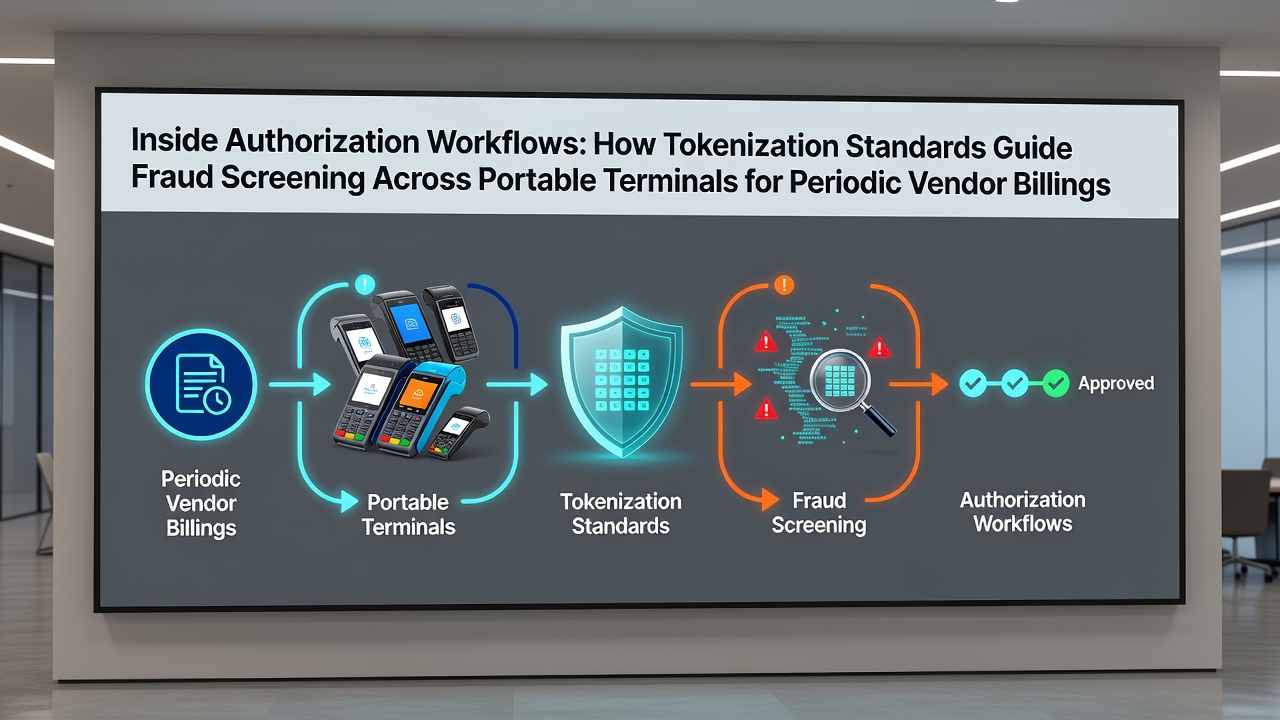
Authorization workflows in portable terminals process recurring vendor billings through layered verification steps that rely on tokenization standards to replace sensitive card data with unique identifiers. These identifiers travel across networks without exposing actual account numbers, which reduces exposure points during each periodic charge cycle. Data shows that tokenization limits the value of intercepted information because the tokens function only within specific merchant environments and expire after defined periods.
Portable terminals used by vendors for monthly or quarterly billings connect to payment processors through encrypted channels that initiate authorization requests at scheduled intervals. The process begins when the terminal retrieves a stored token linked to a customer profile, then forwards it alongside transaction details for approval. Observers note that this approach aligns with requirements from the PCI Security Standards Council, which outlines how tokens must map back to original credentials only through secure vaults controlled by certified providers.
Core Components of Authorization Sequences
Each authorization sequence incorporates multiple checkpoints where the terminal validates the token against issuer rules before transmitting the request. Issuers receive the token rather than raw card data, then cross-reference it with account status and spending patterns. When discrepancies appear, such as unusual billing amounts or frequency shifts, the system flags the transaction for additional review. Research indicates that these checkpoints occur in milliseconds, allowing terminals to maintain quick interactions even during high-volume vendor routes.
Fraud screening layers activate simultaneously with the authorization request. Algorithms compare the current token use against historical patterns stored in the processor database, which includes device location, billing schedule consistency, and customer response rates. And because tokens carry metadata about their creation date and authorized merchants, screening engines detect attempts to reuse tokens outside permitted boundaries.
Integration of Token Standards Across Mobile Environments
Tokenization standards such as those defined in EMV specifications ensure compatibility between portable terminals and various acquirers. Terminals generate or request tokens during initial customer onboarding, then store them locally in encrypted form until the next billing date arrives. This method supports vendors operating across regions because the standards allow tokens to function under different regulatory frameworks without requiring repeated card entry.
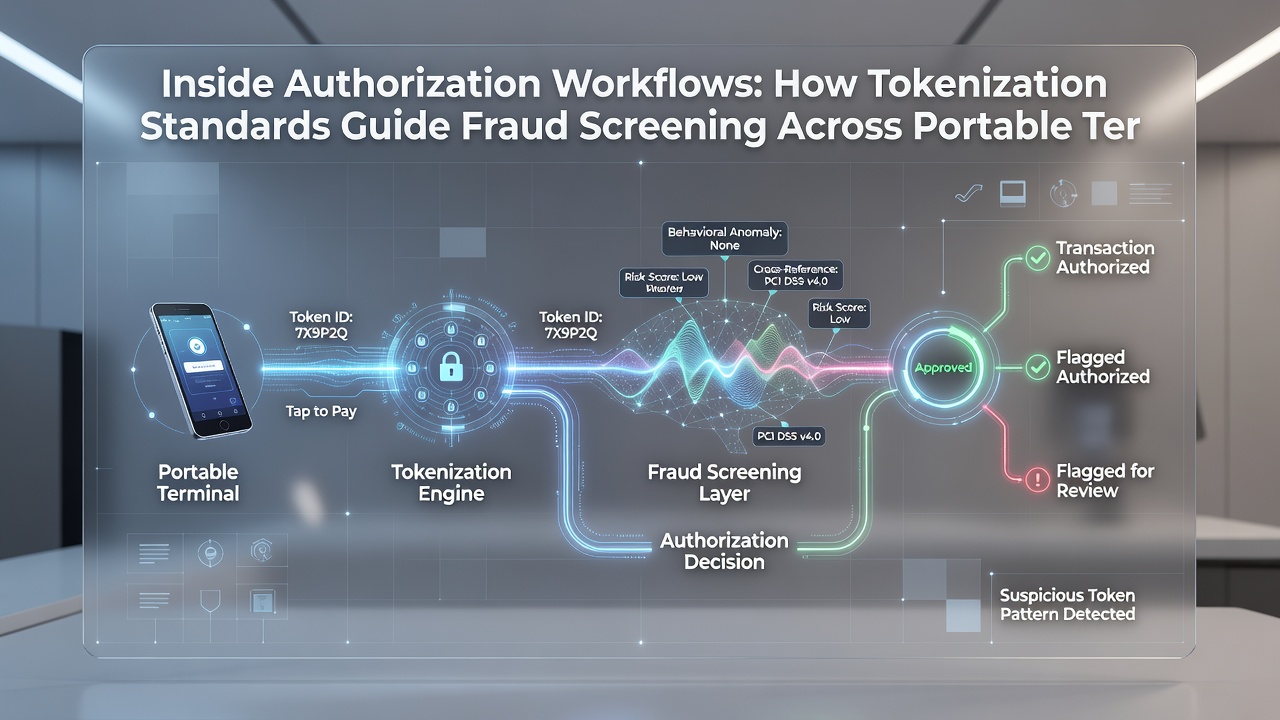
By October 2026, updates to token lifecycle management protocols are scheduled to introduce shorter expiration windows for tokens used in recurring scenarios, which further tightens control over long-term vendor arrangements. Processors already test these shorter cycles in pilot programs, where terminals automatically request token refresh during low-activity periods to avoid service interruptions.
Fraud Screening Mechanisms Driven by Token Metadata
Token metadata includes fields that screening systems use to evaluate risk scores before authorization completes. These fields record the token's origin device, the date of last successful use, and any prior decline reasons. When a terminal submits a recurring request, the screening engine calculates a composite score that determines whether to approve, decline, or route for manual review. Figures from industry reports reveal that metadata-driven screening reduces false positives compared with card-number-based checks alone.
Portable terminals incorporate real-time risk signals such as GPS coordinates and network type into each authorization packet. Combined with token data, these signals allow screening models to identify anomalies like a token appearing from a new geographic area outside the vendor's typical service zone. Those who manage vendor networks report that this combination supports compliance with data protection rules across multiple jurisdictions without storing full card details on the device itself.
Compliance Pathways for Periodic Billings
Regulatory frameworks require that token vaults undergo regular audits to confirm that mapping between tokens and card data remains isolated from merchant systems. Vendors using portable terminals must ensure their devices support token rotation schedules that match these audit cycles. According to guidance from the National Institute of Standards and Technology, token generation processes should employ cryptographic methods that prevent reverse engineering even if device storage is compromised.
Periodic billings add complexity because the same token processes multiple times over months or years. Systems address this by logging each use instance separately while maintaining the single token identifier, which enables pattern analysis without accumulating redundant data. External links to authoritative sources like the PCI Security Standards Council provide detailed mapping of these requirements, while resources from the National Institute of Standards and Technology outline recommended cryptographic approaches for token handling.
Conclusion
Tokenization standards continue to direct how authorization workflows handle fraud screening for recurring vendor billings on portable terminals by substituting persistent identifiers for sensitive data and embedding metadata that supports targeted risk evaluation. This structure maintains transaction speed while meeting compliance obligations across evolving regulatory environments. Vendors and processors that align terminal configurations with current token protocols gain consistent processing reliability for periodic charges without expanding exposure to account information.