Firmware Oversight Cycles for Handheld Donation Terminals Serving Grassroots Nonprofits
Morgan Brooks · Nov 9, 2026
Firmware Oversight Cycles for Handheld Donation Terminals Serving Grassroots Nonprofits
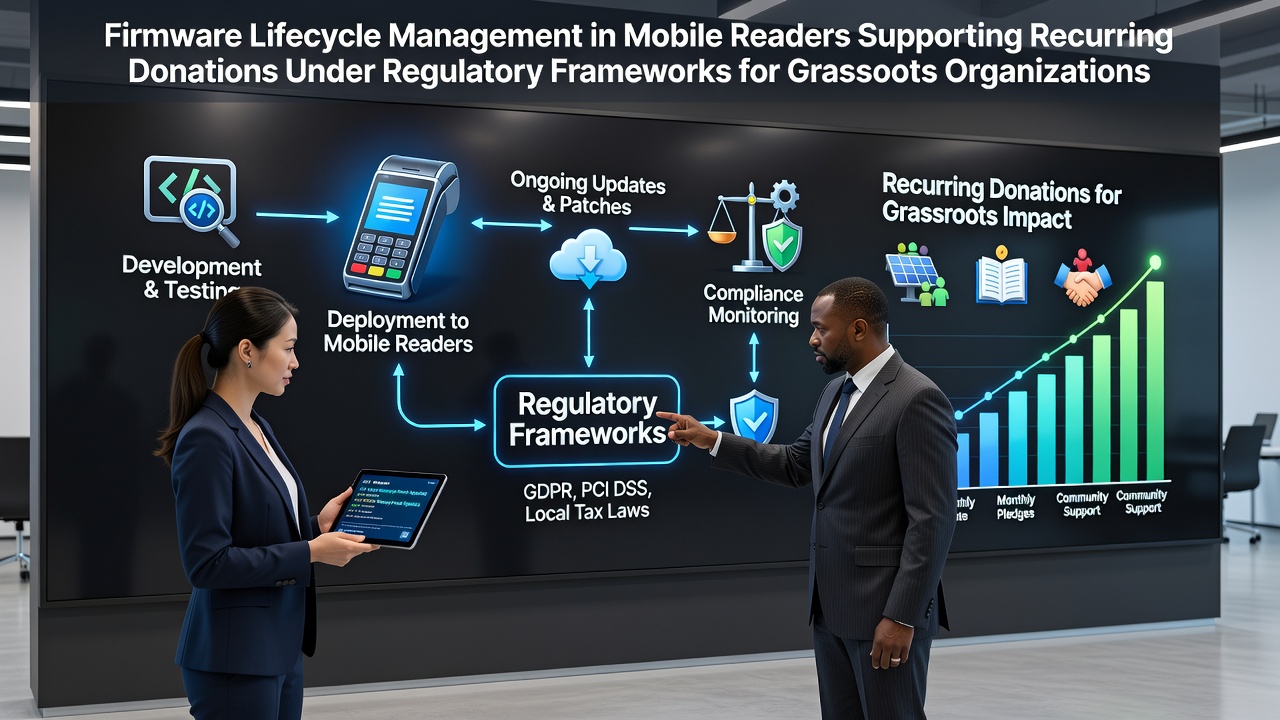
Grassroots organizations rely on mobile card readers to collect recurring donations while meeting strict data security rules that govern payment processing and personal information handling. Firmware lifecycle management covers the full sequence from initial coding through testing, deployment, ongoing patches, and eventual retirement of the software that runs these portable devices. Research from industry reports shows that proper sequencing reduces vulnerabilities that could expose donor details during automated monthly charges.
Core Stages in Device Software Management
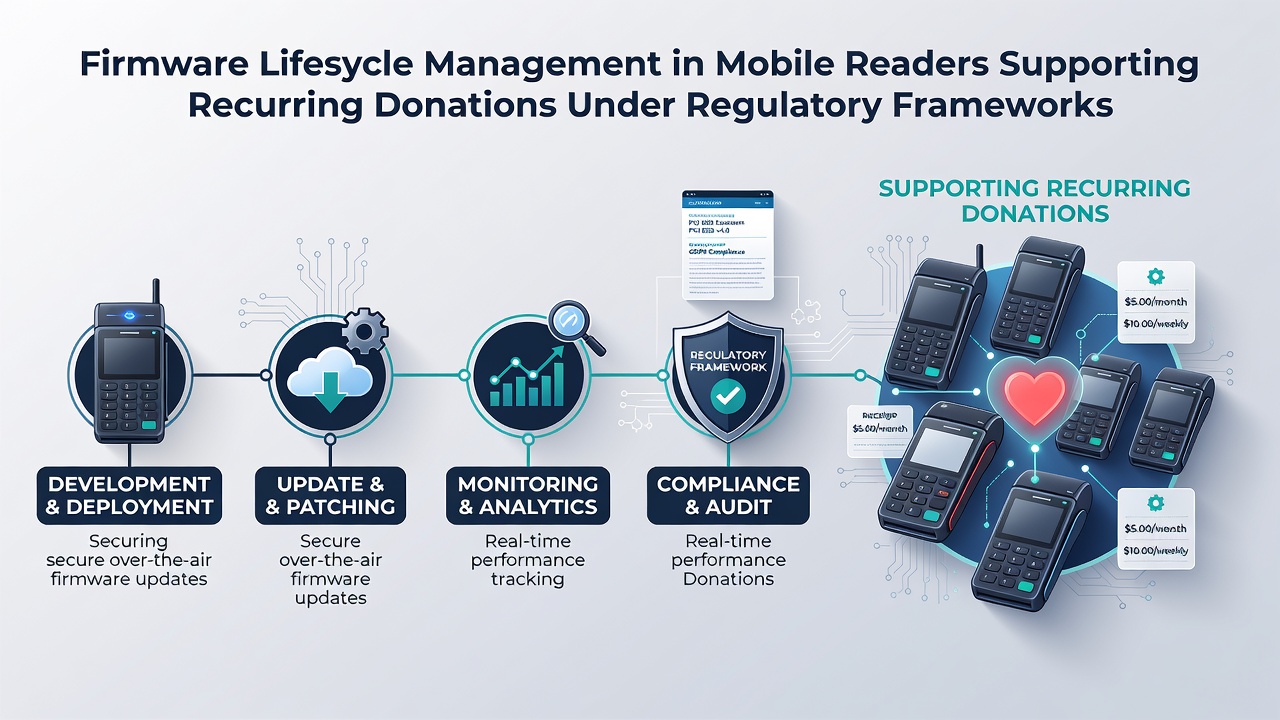
Development teams begin with requirements gathering that incorporates regulatory mandates from multiple jurisdictions, then move into coding phases where encryption routines and authentication protocols receive priority attention. Testing follows in controlled environments that simulate real-world transaction volumes, after which signed firmware packages reach field devices through secure over-the-air channels. Maintenance involves scheduled reviews that check for newly identified threats, and end-of-life planning ensures older readers transition to supported hardware before support windows close. Data indicates that organizations completing these stages in sequence experience fewer compliance incidents compared with those that skip formal retirement steps.
Regulatory Pressures Shaping Update Cadences
Payment card industry standards require regular validation that firmware on readers processing recurring donations maintains approved security configurations, while data protection frameworks in the European Union and Canada add layers covering consent management and breach notification timelines. Observers note that November 2026 marks the rollout date for revised technical specifications that will affect how mobile terminals authenticate recurring authorization tokens. Compliance teams therefore schedule firmware audits well in advance, aligning patch deployments with these deadlines to avoid service interruptions for small nonprofits that depend on steady donation streams.
Security Measures Embedded in Lifecycle Workflows
Encryption key rotation occurs at defined intervals during the active maintenance phase, preventing long-term exposure if a device falls into unauthorized hands. Access controls limit who can initiate updates, and audit logs capture every change for later review by assessors. Those who have studied deployment patterns report that automated verification steps catch signature mismatches before installation completes, reducing the chance that tampered code reaches grassroots operations. External guidance from the PCI Security Standards Council outlines minimum intervals for such controls in payment environments.
Community groups often operate with limited technical staff, so vendor-managed services handle much of the day-to-day monitoring. These services push validated updates during low-traffic windows and provide documentation that satisfies auditor requests. Figures from recent compliance surveys reveal that organizations using centralized management platforms complete required validations more consistently than those relying on manual processes alone.
Integration With Recurring Donation Workflows
Recurring donation setups depend on stable firmware that correctly handles token storage and scheduled authorization requests without introducing latency. When lifecycle processes run smoothly, readers maintain compatibility with backend systems that process monthly or quarterly gifts. Studies from payment research groups show that firmware versions lacking timely security patches correlate with higher rates of declined transactions in subscription-style donation programs. Grassroots entities therefore coordinate update schedules with their donation platform providers to keep authorization pathways intact.
Hardware diversity adds another variable, since different reader models reach end-of-support at varying times. Planning documents track serial numbers and firmware versions across an organization's fleet, allowing advance procurement of replacements before support ceases. Canadian regulatory resources emphasize similar tracking for any device handling protected financial data, encouraging nonprofits to maintain inventories that feed directly into lifecycle calendars.
Practical Coordination Across Teams
Finance staff, technical volunteers, and external assessors share responsibility for confirming that each firmware release meets both functional and compliance criteria. Joint review meetings examine change logs, test results, and risk assessments before approving wide deployment. Those managing multiple field locations find that phased rollouts, starting with a pilot group of readers, surface issues early and limit impact on active donation collection. This approach aligns with practices described in guidance from the National Institute of Standards and Technology, which addresses secure update mechanisms across distributed device networks.
Conclusion
Firmware lifecycle management provides the operational backbone that allows mobile readers to support recurring donations reliably while satisfying overlapping regulatory demands. Structured progression through development, deployment, maintenance, and retirement stages reduces exposure and supports consistent service for grassroots organizations. Continued alignment with evolving standards, including those taking effect in November 2026, ensures these systems remain both functional and compliant over time.