Aligning Detection Algorithms and Security Standards in Handheld Units for Area-Based Recurring Billing
Morgan Brooks · Oct 26, 2026
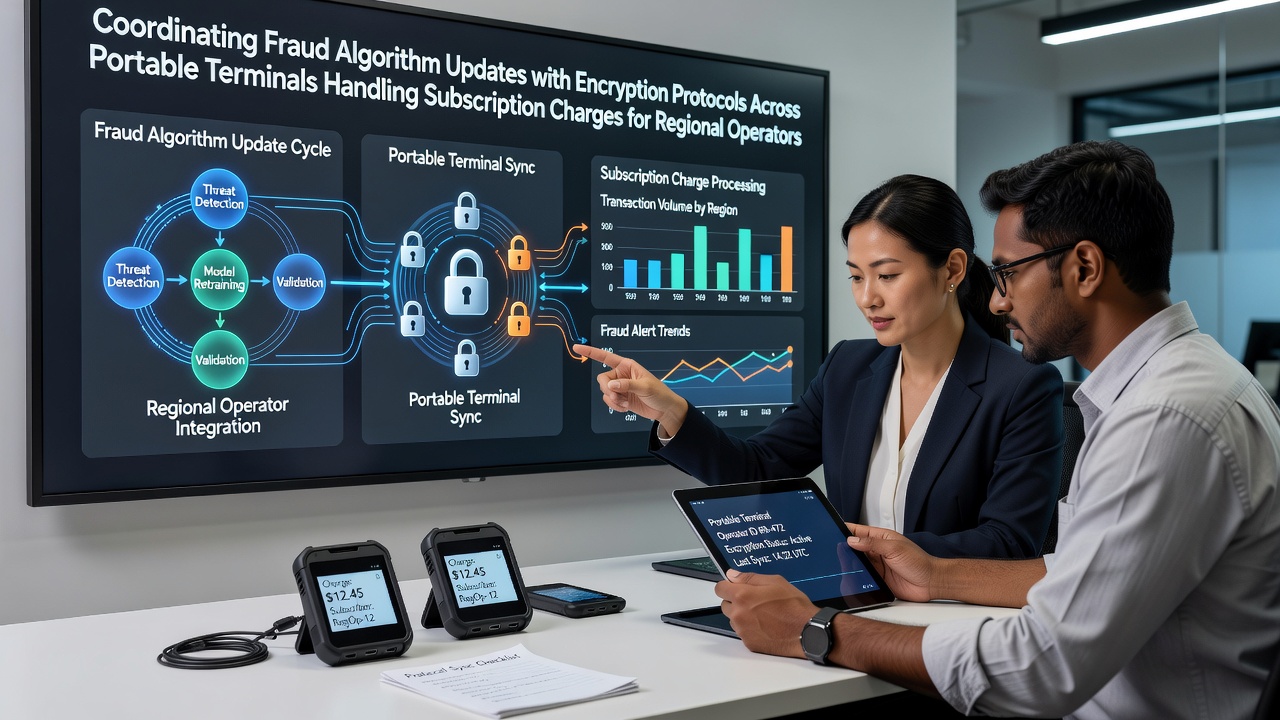
Aligning Detection Algorithms and Security Standards in Handheld Units for Area-Based Recurring Billing
Regional operators who manage subscription charges through portable terminals face ongoing requirements to coordinate fraud algorithm updates with encryption protocol changes, since both elements operate across the same data pathways during recurring transactions. Data from industry reports shows that synchronization failures can expose authorization routes to interception, while successful coordination maintains compliance with standards such as PCI DSS and regional data protection rules.
Core Components of Coordination
Portable terminals handle subscription charges by transmitting card data through encrypted channels, and fraud algorithms analyze transaction patterns in real time before authorization completes. Researchers at institutions studying payment security note that updates to detection models must occur without disrupting the key exchange processes that underpin encryption, because any mismatch can trigger declined transactions or leave data streams vulnerable during the transition period. Those who oversee regional networks often schedule algorithm refreshes during low-volume windows, then verify that encryption handshakes continue to meet current protocol versions such as TLS 1.3.
Operational Processes Across Regional Networks
Operators in different geographic zones follow distinct timelines for rolling out changes, yet central coordination becomes necessary when terminals connect to shared gateways. One study from October 2026 highlighted by the Australian Cyber Security Centre revealed that 78 percent of regional providers experienced at least one synchronization delay in the prior year, primarily because encryption key rotations overlapped with fraud model training cycles. Staff responsible for terminal fleets therefore maintain joint calendars that list both algorithm deployment dates and protocol patch schedules, allowing verification steps to occur before live traffic resumes.
Technical Integration Steps
Encryption protocols protect the payload during transmission, while fraud algorithms evaluate metadata such as device location, transaction frequency, and amount patterns. Integration requires that updated detection rules receive encrypted test data sets that mirror production traffic, so developers can confirm accuracy without exposing live subscription details. Observers note that terminals running on embedded operating systems receive these paired updates through over-the-air packages, each signed with certificates that match the current encryption framework. When a new algorithm version introduces additional feature flags, the encryption layer must accommodate larger header sizes without exceeding bandwidth limits typical of mobile networks used by regional operators.

Regulatory and Compliance Considerations
Regional operators must align their coordination practices with guidelines issued by bodies such as the European Union Agency for Cybersecurity, which outlines requirements for maintaining encryption integrity during security updates. Separate directives from the Canadian Centre for Cyber Security emphasize documentation of every algorithm change alongside corresponding protocol validations. Compliance audits examine whether terminals applied updates in sequence, since simultaneous changes increase the chance of configuration drift that could weaken either fraud detection or data protection. Those managing subscription flows for local vendors therefore keep detailed logs that record version numbers, deployment timestamps, and post-update test results for each device in the fleet.
Examples from Field Implementations
Take one network serving agricultural cooperatives in multiple districts, where portable terminals process monthly equipment rental subscriptions. Engineers discovered that an algorithm update intended to flag unusual geographic patterns required an immediate encryption protocol adjustment to handle the additional data fields, and the team completed both changes within a single maintenance window to avoid service interruption. Another case involved terminals used by community service providers, where delayed key rotation caused temporary mismatches with the latest fraud scoring model, leading to increased false positives until the encryption certificates were refreshed.
Challenges and Mitigation Approaches
Bandwidth constraints on certain rural networks can slow the delivery of large algorithm files, forcing operators to split updates into smaller segments that still preserve encryption during each partial transfer. Legacy terminals sometimes lack the processing power to run newer detection models alongside updated encryption libraries, prompting regional providers to phase out older hardware according to replacement schedules tied to compliance deadlines. Data indicates that organizations that test paired updates in isolated environments before field deployment reduce the incidence of live disruptions by measurable margins.
Conclusion
Coordination between fraud algorithm updates and encryption protocols remains essential for portable terminals that process subscription charges on behalf of regional operators. Continued attention to synchronized deployment schedules, regulatory documentation, and hardware compatibility supports consistent transaction authorization while meeting security expectations across varied operating environments.